Les Hasards heureux de l'escarpolette
Les Hasards heureux de l’escarpolette : Les Hasards heureux de l’escarpolette est une scène galante peinte par Jean-Honoré Fragonard entre 1767 et 1769. Les Hasards heureux de l’escarpolette sur Wikipédia (fr)
The Swing (Fragonard) : The Swing (French: L’Escarpolette), also known as The Happy Accidents of the Swing (French: Les Hasards heureux de l’escarpolette, the original title), is an 18th-century oil painting by Jean-Honoré Fragonard in the Wallace Collection in London. It is considered to be one of the masterpieces of the Rococo era, and is Fragonard’s best-known work. The Swing (Fragonard) sur Wikipédia (en)
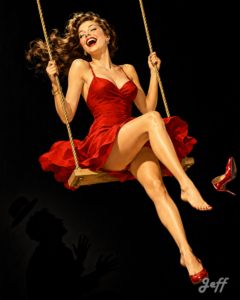
Sur fond noir de jais, elle s’élance sur une balançoire suspendue pendant qu’une silhouette graphique l’admire depuis l’ombre.
Against a jet-black background, she swings forward on a suspended swing while a graphic silhouette admires her from the shadow.
Dans le jardin du manoir, la blonde fatale se balance doucement pendant qu’un homme en trench-coat l’observe depuis le portail.
In the mansion garden, the blonde fatale swings gently while a man in a trench coat watches from the gate.
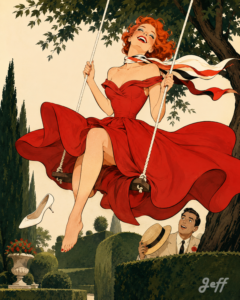
Dans un jardin français stylisé, Marianne s’élance sur la balançoire pendant qu’un galant homme l’admire, canotier envolé, depuis la haie.
In a stylised French garden, Marianne swings forward while a smitten gentleman watches from the hedge, his boater flying off.
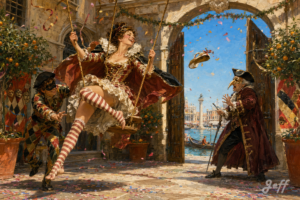
Dans la cour ensoleillée du palazzo, Colombina s’envole sur la balançoire tandis que sa mule file droit vers Pantalone qui franchit le portail en plein jour.
In the sunlit palazzo courtyard, Colombina soars on the swing as her shoe flies straight toward Pantalone, who steps through the gate in broad daylight.

Sur fond blanc immaculé, Natacha s’élance sur la balançoire pendant qu’une silhouette graphique l’admire depuis le bas du cadre.
Against a pure white background, Natacha swings forward while a graphic silhouette admires her from the base of the frame.